Basic Korean Sentences You Need to Know
Basic Korean sentences are one of the best ways to start learning Korean naturally. Instead of memorizing isolated vocabulary words, learning full Korean sentences helps you understand real conversations faster and improve your listening skills naturally.
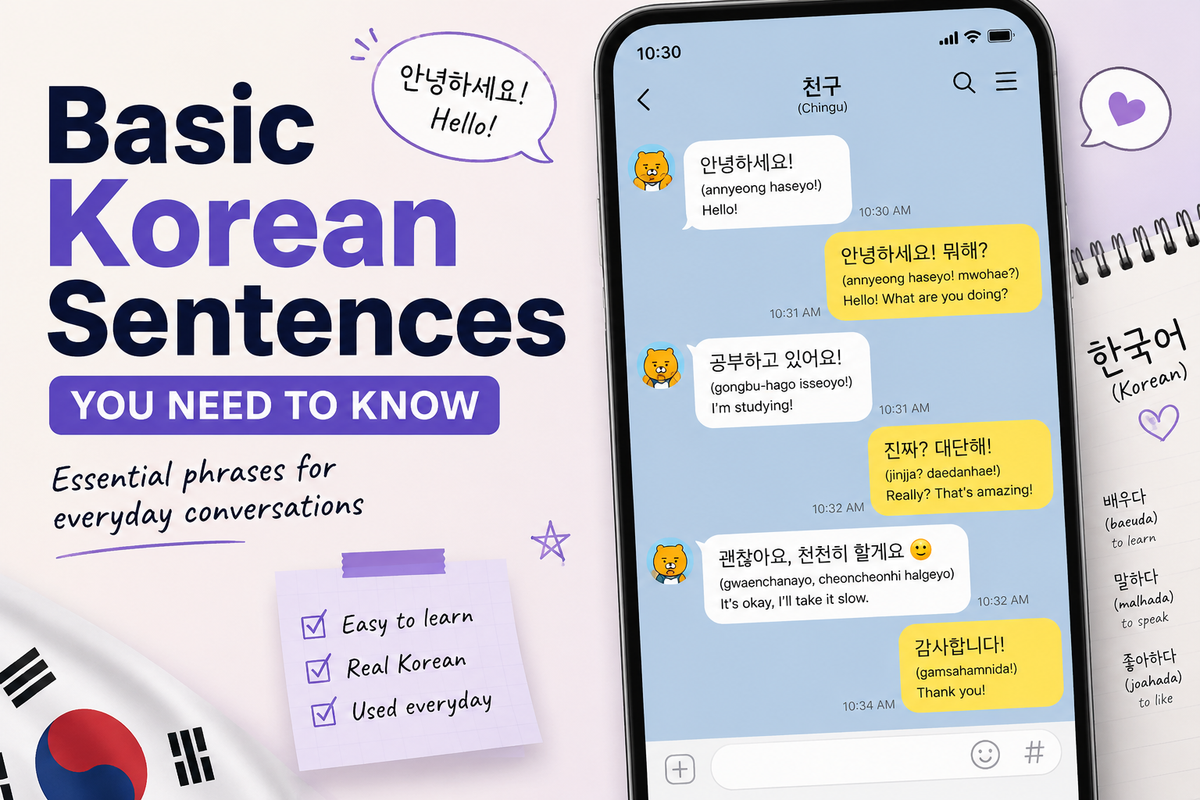
Basic Korean sentences are one of the best ways to start learning Korean naturally. Instead of memorizing isolated vocabulary words, learning full Korean sentences helps you understand real conversations faster and improve your listening skills naturally.
In this guide, you will discover basic Korean sentences used in everyday life, their pronunciation, and how native speakers actually use them.
Hello in Korean
안녕하세요
Pronunciation: annyeong haseyo
Meaning: Hello
This is the most common polite greeting in Korean.
Example:
- 안녕하세요!
- annyeong haseyo!
- Hello!
Nice to Meet You
만나서 반갑습니다
Pronunciation: mannaseo bangapseumnida
Meaning: Nice to meet you
A very common sentence during introductions.
Yes and No
네
Pronunciation: ne
Meaning: Yes
This is the standard and polite way to say “yes” in Korean.
아니요
Pronunciation: aniyo
Meaning: No
This is the most common polite way to say “no”.
Example:
- 한국어를 좋아해요?
- hangugeoreul joahaeyo?
- Do you like Korean?
- 네!
- ne!
- Yes!
Another example:
- 한국어 잘해요?
- hangugeo jalhaeyo?
- Do you speak Korean well?
- 아니요, 잘 못해요
- aniyo, jal mothaeyo
- No, I do not speak Korean well
I Don’t Know
몰라요
Pronunciation: mollayo
Meaning: I don’t know
Native Korean speakers use this expression constantly in daily conversations.
Casual version:
- 몰라
- molla
I Understand
알겠어요
Pronunciation: algesseoyo
Meaning: I understand / Okay
Very common when someone explains something.
Example:
- 네, 알겠어요
- ne, algesseoyo
- Yes, I understand
That’s Right
맞아요
Pronunciation: majayo
Meaning: That’s right / Correct
A very natural Korean reaction used in conversations.
Please Give Me
주세요
Pronunciation: juseyo
Meaning: Please give me
One of the most useful Korean phrases for restaurants, cafés, and shopping.
Example:
- 물 주세요
- mul juseyo
- Water, please
- 커피 주세요
- keopi juseyo
- Coffee, please
My Name Is
제 이름은 ___예요
Pronunciation: je ireumeun ___yeyo
Meaning: My name is...
Example:
- 제 이름은 Alex예요
- je ireumeun Alexyeyo
- My name is Alex
I Am French
저는 프랑스 사람이에요
Pronunciation: jeoneun peurangseu saramieyo
Meaning: I am French
You can replace the country with another nationality.
Examples:
- 저는 미국 사람이에요
- jeoneun miguk saramieyo
- I am American
- 저는 일본 사람이에요
- jeoneun ilbon saramieyo
- I am Japanese
I Am Learning Korean
한국어를 배우고 있어요
Pronunciation: hangugeoreul baeugo isseoyo
Meaning: I am learning Korean
This is a useful sentence when talking to Korean speakers.
I Do Not Speak Korean Well
한국어를 잘 못해요
Pronunciation: hangugeoreul jal mothaeyo
Meaning: I do not speak Korean well
This is one of the most useful basic Korean sentences for beginners.
You can also say:
한국어를 조금 해요
Pronunciation: hangugeoreul jogeum haeyo
Meaning: I speak a little Korean
Please Speak Slowly
천천히 말해주세요
Pronunciation: cheoncheonhi malhae juseyo
Meaning: Please speak slowly
Native Korean speakers often speak quickly, so this sentence is extremely helpful.
I Don’t Understand
이해 못했어요
Pronunciation: ihae mothaesseoyo
Meaning: I did not understand
You can also say:
이해했어요
Pronunciation: ihaehaesseoyo
Meaning: I understood
Please Say It Again
다시 말해주세요
Pronunciation: dashi malhae juseyo
Meaning: Please say it again
Very useful for improving your Korean listening skills.
Thank You
감사합니다
Pronunciation: gamsahamnida
Meaning: Thank you
Casual version:
- 고마워요
- gomawoyo
Sorry / Excuse Me
죄송합니다
Pronunciation: joesonghamnida
Meaning: I’m sorry / Excuse me
Used in many daily situations.
What Are You Doing?
뭐 하고 있어요?
Pronunciation: mwo hago isseoyo?
Meaning: What are you doing?
Very common in conversations and text messages.
Casual version:
- 뭐해?
- mwohae?
Where Are You Going?
어디 가요?
Pronunciation: eodi gayo?
Meaning: Where are you going?
Simple but very common in daily Korean conversations.
It’s Okay
괜찮아요
Pronunciation: gwaenchanayo
Meaning: It’s okay
This expression can mean:
- it’s okay,
- no problem,
- I’m fine,
- don’t worry.
Korean speakers use it constantly.
Really?
진짜요?
Pronunciation: jinjjayo?
Meaning: Really?
Casual version:
- 진짜?
- jinjja?
If you watch Korean dramas or variety shows, you have probably heard “jinjja?” many times. Native speakers use it constantly to express surprise or disbelief.

I Like It
좋아해요
Pronunciation: joahaeyo
Meaning: I like it
Example:
- 한국 음식 좋아해요
- hanguk eumsik joahaeyo
- I like Korean food
Why Learning Basic Korean Sentences Is Better Than Memorizing Words
Many beginners only study vocabulary lists, but native speakers communicate using complete sentences and repeated patterns.
Learning basic Korean sentences helps you:
- understand conversations faster,
- improve listening naturally,
- recognize common sentence patterns,
- remember grammar more easily,
- build confidence when speaking.
This is why comprehensible input is such an effective way to learn Korean naturally.