Italian Slang to Make Your Italian Feel Alive
Learn Italian slang with pronunciation, examples, audio, and usage notes so your Italian sounds more natural, casual, and alive.
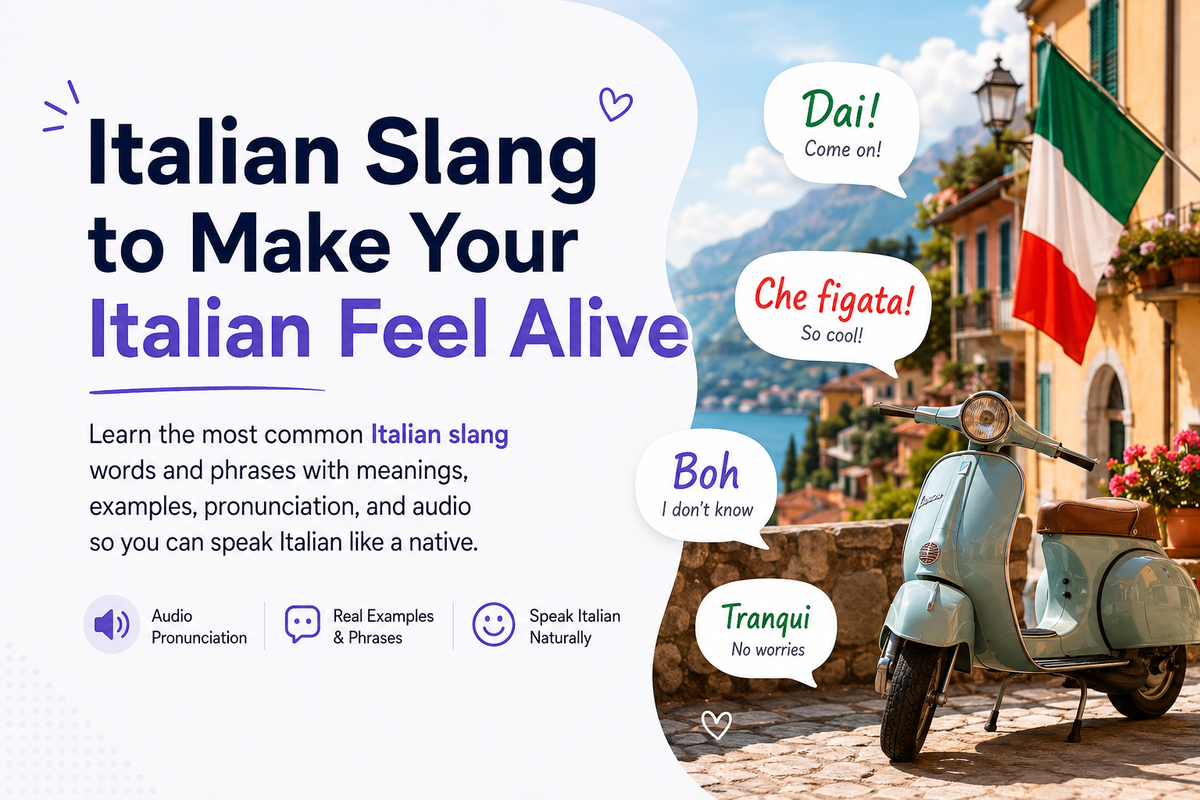
Italian slang is what makes spoken Italian feel alive. It is the casual, expressive language you hear between friends, in texts, in social media comments, in movies, and in everyday conversations. You do not need hundreds of expressions at once. Start with the slang Italians use often, learn the tone, and practice each word inside a real sentence.
This guide gives you 30 common Italian slang words and phrases with written pronunciation, meanings, natural examples, and audio buttons. Some expressions are safe in most casual situations. Others are better to understand first and use only when you know the person and the context.
Quick rules before using Italian slang
Slang is informal by nature. It can sound friendly, funny, warm, sarcastic, rude, or too familiar depending on who you are talking to. A phrase that sounds normal with friends may sound strange in a work email or with someone you have just met.
Listen first
Notice who says the word, where they say it, and whether the tone is playful, annoyed, or serious.
Start with safe slang
Words like boh, dai, magari, and figurati are useful and not too risky.
Avoid slang in formal settings
Use standard Italian for emails, interviews, work meetings, and conversations with people you do not know well.
Pronunciation note: the pronunciation in this article is written for English speakers. It is a learning aid, not perfect phonetic transcription. Use the audio buttons and real Italian input whenever possible.
Everyday Italian slang words
These words are a good first set because they appear in casual conversation often. They help you react naturally, show surprise, soften a sentence, or sound less textbook.
Italian slang phrases for real conversations
Slang is often more useful as a whole phrase than as a single word. These expressions help you react to good news, bad news, awkward moments, plans, and casual invitations.
Italian internet and texting slang
Italian online slang often shortens common words or turns English verbs into Italian-style verbs. You may see these in texts, comments, chats, and social media captions. Do not use them in formal writing.
Regional slang you may hear
Italian slang changes a lot from city to city. Some words are understood widely, while others clearly sound Roman, Neapolitan, Sardinian, Ligurian, or from another local variety. Learn these mainly for recognition before using them yourself.
Italian slang vs Italian-American slang: words like “gabagool” belong to Italian-American speech and are not the same as standard Italian slang used in Italy. They can be interesting culturally, but they may sound confusing if you use them in Italy.
How to practice Italian slang naturally
The best way to learn slang is to hear it inside real conversations. A word like dai can sound encouraging, annoyed, playful, or impatient depending on the voice. That is hard to learn from a list alone.
Use slang with context, not as decoration
Pick five expressions from this article and listen for them in Italian videos, podcasts, interviews, street clips, and subtitles. When you notice the same phrase several times, write down the full sentence, not just the word.
This is where comprehensible input helps. You understand more because the word is attached to a voice, a situation, and a visual clue. You can also use Lokia to learn Italian from real videos and subtitles, save useful expressions, and review them later in context.
A simple practice routine is enough: listen, repeat, save one example sentence, and wait until you hear the expression again. Slang feels natural when you recognize it before you try to use it.
Italian slang FAQ
What is the most common Italian slang word?
Boh is one of the most useful Italian slang words for beginners. It means “I do not know” or “who knows” and is common in casual spoken Italian.
Can I use Italian slang with strangers?
Use caution. Mild words like figurati, dai, and meno male are usually safe, but stronger slang can sound rude or too familiar.
Is Italian slang the same everywhere in Italy?
No. Some slang is understood across the country, but many expressions are regional. A word from Rome, Naples, Sardinia, Liguria, or another region may not feel natural everywhere.
Is Italian-American slang useful in Italy?
It can help you understand Italian-American culture, but it is not the same as slang used by most Italians in Italy. Learn it separately so you do not mix the two.
How can I remember Italian slang?
Save full example sentences, listen to native audio, and review slang in context. It is easier to remember Che figata questo posto! than the isolated word figata.