Russian Alphabet: Learn Cyrillic Letters with Audio
Learn the Russian alphabet with audio, pronunciation, examples, and a complete Cyrillic letter chart for beginners.
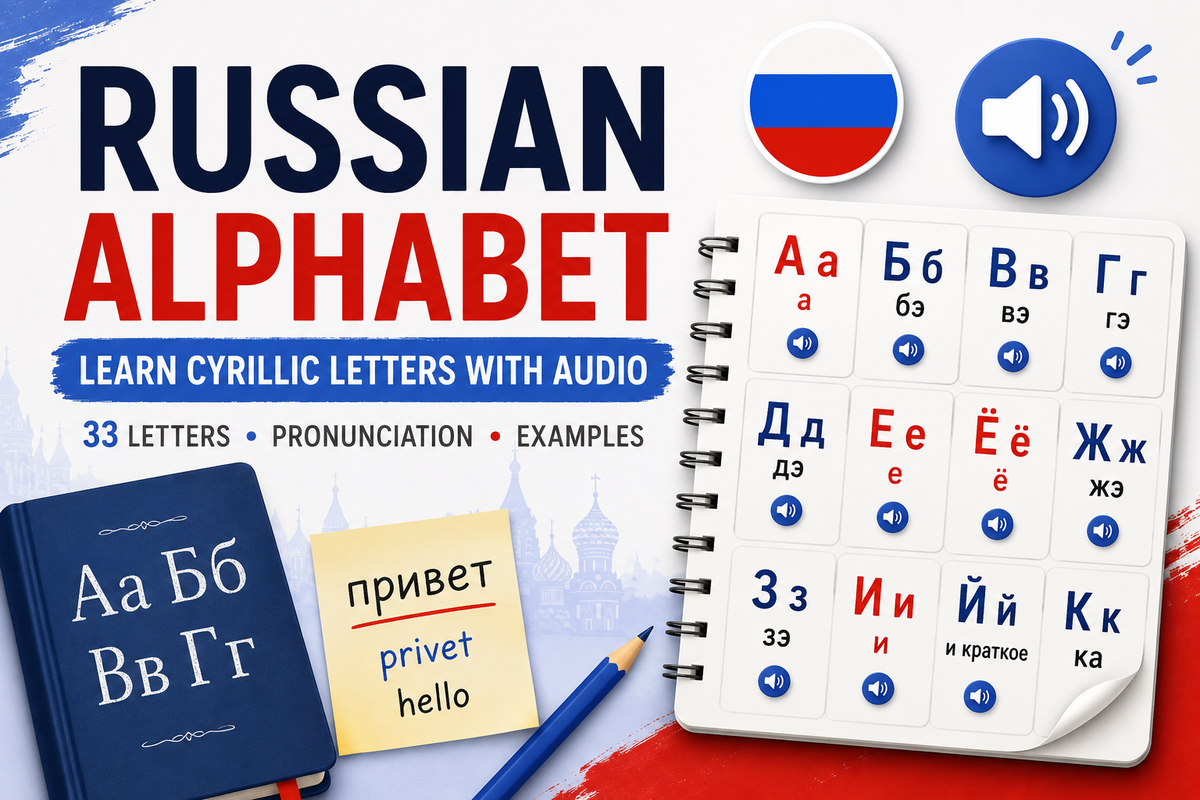
The Russian alphabet is the first thing you need to learn if you want to read Russian, type Russian words, and pronounce Cyrillic letters with confidence.
The good news is that the Russian alphabet is more logical than it looks. Some letters are familiar, some look familiar but sound different, and some are completely new. Once you sort them into groups, Cyrillic becomes much easier to remember.
Russian alphabet chart with audio
This table gives you the complete Russian alphabet with uppercase and lowercase letters, letter names, beginner-friendly pronunciation, and simple examples.
| Letter | Name | Sound | Example | Audio |
|---|---|---|---|---|
| А а | a | a as in father | атом a-tom, atom |
|
| Б б | be | b as in boy | банк bank, bank |
|
| В в | ve | v as in voice | вино vi-no, wine |
|
| Г г | ge | g as in go | город go-rod, city |
|
| Д д | de | d as in day | дом dom, house |
|
| Е е | ye | ye as in yes, or e after consonants | Европа yev-ro-pa, Europe |
|
| Ё ё | yo | yo as in your | ёж yozh, hedgehog |
|
| Ж ж | zhe | zh as in pleasure | журнал zhur-nal, magazine |
|
| З з | ze | z as in zoo | зима zi-ma, winter |
|
| И и | i | ee as in meet | имя i-mya, name |
|
| Й й | short i | y as in boy | йога yo-ga, yoga |
|
| К к | ka | k as in key | кот kot, cat |
|
| Л л | el | l as in lamp | лампа lam-pa, lamp |
|
| М м | em | m as in man | мама ma-ma, mom |
|
| Н н | en | n as in no | нет nyet, no |
|
| О о | o | o as in more when stressed | он on, he |
|
| П п | pe | p as in pen | папа pa-pa, dad |
|
| Р р | er | rolled r | рыба ry-ba, fish |
|
| С с | es | s as in sun | сок sok, juice |
|
| Т т | te | t as in table | там tam, there |
|
| У у | u | oo as in moon | утро ut-ro, morning |
|
| Ф ф | ef | f as in food | фото fo-to, photo |
|
| Х х | kha | kh, like Scottish loch | хлеб khleb, bread |
|
| Ц ц | tse | ts as in cats | центр tsentr, center |
|
| Ч ч | che | ch as in chair | чай chai, tea |
|
| Ш ш | sha | sh as in shop | школа shko-la, school |
|
| Щ щ | shcha | soft shch sound | щётка shchot-ka, brush |
|
| Ъ ъ | hard sign | no sound by itself | объект ob-yekt, object |
|
| Ы ы | y | hard i sound, no exact English match | мы my, we |
|
| Ь ь | soft sign | softens the previous consonant | день dyen, day |
|
| Э э | e | e as in end | это e-to, this |
|
| Ю ю | yu | yu as in universe | юг yug, south |
|
| Я я | ya | ya as in yard | я ya, I |
How to learn Russian letters faster
The easiest way to learn the Russian alphabet is not to memorize 33 letters in a random list. It is better to divide them into groups.
Letters that look and sound close to English letters, such as А, К, М, О, Т.
Letters that look familiar but sound different, such as В, Н, Р, С, У, Х.
Letters that may look completely new, such as Ж, Ц, Ч, Ш, Щ, Ы.
This grouping makes the alphabet feel smaller. Instead of learning 33 unrelated symbols, you learn a few patterns.
If you like learning through real examples instead of isolated letters, you may also enjoy our guide to comprehensible input.
Russian letters that look like English
Some Russian letters are friendly for beginners because they look familiar and sound similar to English.
| Russian | Sound | Example | Audio |
|---|---|---|---|
| А а | a as in father | атом -->atom | |
| К к | k as in key | кот -->cat | |
| М м | m as in man | мама -->mom | |
| О о | o when stressed | он -->he | |
| Т т | t as in table | там -->there |
Russian letters that look familiar but sound different
These are the letters that confuse beginners the most. They look like English letters, but they do not sound like them.
| Russian | Looks like | Actually sounds like | Example |
|---|---|---|---|
| В в | B | v | вино -->wine |
| Н н | H | n | нет -->no |
| Р р | P | rolled r | рыба -->fish |
| С с | C | s | сок -->juice |
| У у | Y | oo | утро -->morning |
| Х х | X | kh | хлеб -->bread |
Russian letters that are new for English speakers
Some Russian letters do not look like English letters. These take more practice, but they are not random once you connect each one to a sound.
| Russian | Sound | Example | Audio |
|---|---|---|---|
| Ж ж | zh as in pleasure | журнал -->magazine | |
| Ц ц | ts as in cats | центр -->center | |
| Ч ч | ch as in chair | чай -->tea | |
| Ш ш | sh as in shop | школа -->school | |
| Щ щ | soft shch sound | щётка -->brush | |
| Ы ы | hard i sound | мы -->we |
The hard sign and soft sign
Russian has two signs that do not have their own sound: ъ and ь.
The hard sign separates sounds. It is less common than the soft sign, but you will see it in words like объект.
The soft sign makes the previous consonant soft. It appears in common words like день.
These signs are not pronounced alone. They change how nearby letters behave.
Practice typing Russian letters
Use this mini keyboard to type Russian letters. This is useful if you do not have a Russian keyboard installed yet.
Practice reading simple Russian words
Now try reading short Russian words. Click play, listen, then read the word out loud.
When you practice with real words, the letters stop feeling abstract. You begin to recognize sounds inside words instead of memorizing symbols alone.
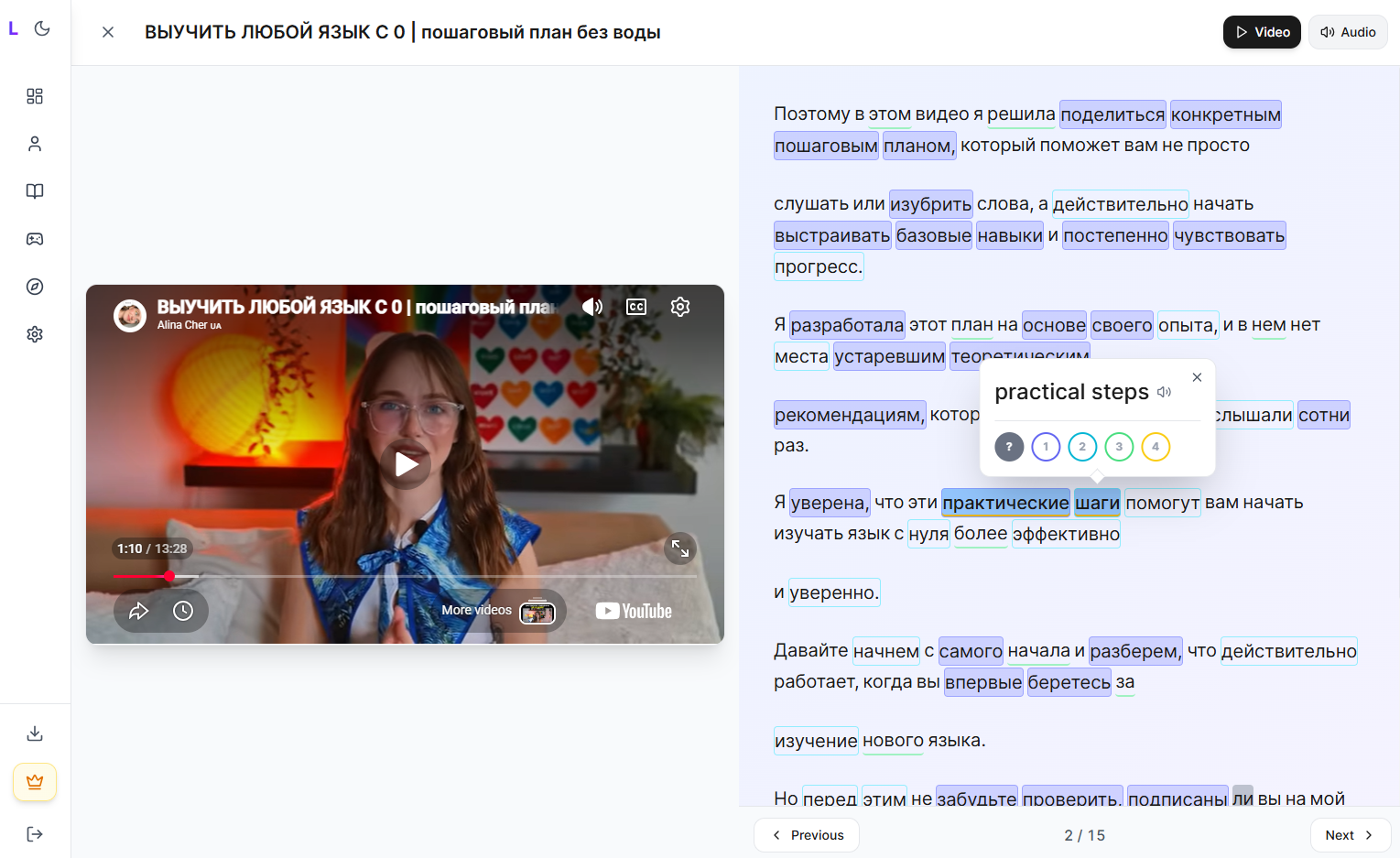
After the alphabet starts to feel familiar, try reading short Russian phrases in context. Interactive subtitles in Lokia can help you connect the letters you just learned with real words, voices, and sentences.
Common mistakes beginners make
Reading Cyrillic letters like English letters
This is the biggest beginner mistake. Russian Р is not English P. Russian Н is not English H. Russian В is not English B.
Ignoring stress
Russian stress matters. The same letter can sound slightly different depending on whether it is stressed or unstressed. For beginners, the most important thing is to listen carefully and repeat whole words, not just isolated letters.
Trying to learn everything in one sitting
You do not need to master the entire alphabet perfectly in one day. Learn a group, read words with that group, then move to the next group.
A simple Russian alphabet practice routine
Here is a practical routine you can use for the first week.
Learn the familiar letters: А, К, М, О, Т. Read simple words like мама, том, кот.
Learn false friends: В, Н, Р, С, У, Х. Pay special attention to their real sounds.
Learn new consonants: Ж, Ц, Ч, Ш, Щ. Practice slowly with audio.
Learn the vowels: А, Е, Ё, И, О, У, Ы, Э, Ю, Я.
Review the hard sign and soft sign: ъ and ь. Focus on recognizing them in words.
Read short words out loud and type them using the mini keyboard above.
If you are wondering how long it usually takes to become comfortable with a new language, our guide on how long it takes to learn a language gives a realistic overview.
What to remember about the Russian alphabet
The Russian alphabet may look intimidating at first, but it becomes manageable when you split it into groups and practice with sound.
Once you can read Cyrillic, Russian becomes much less mysterious. You will be able to recognize names, type Russian words, follow subtitles, and start learning vocabulary with more confidence.