Korean Alphabet Quiz: Test Your Hangul Skills
Take a Korean alphabet quiz with Hangul vowels, consonants, syllable blocks, audio questions, instant feedback, and pronunciation practice.
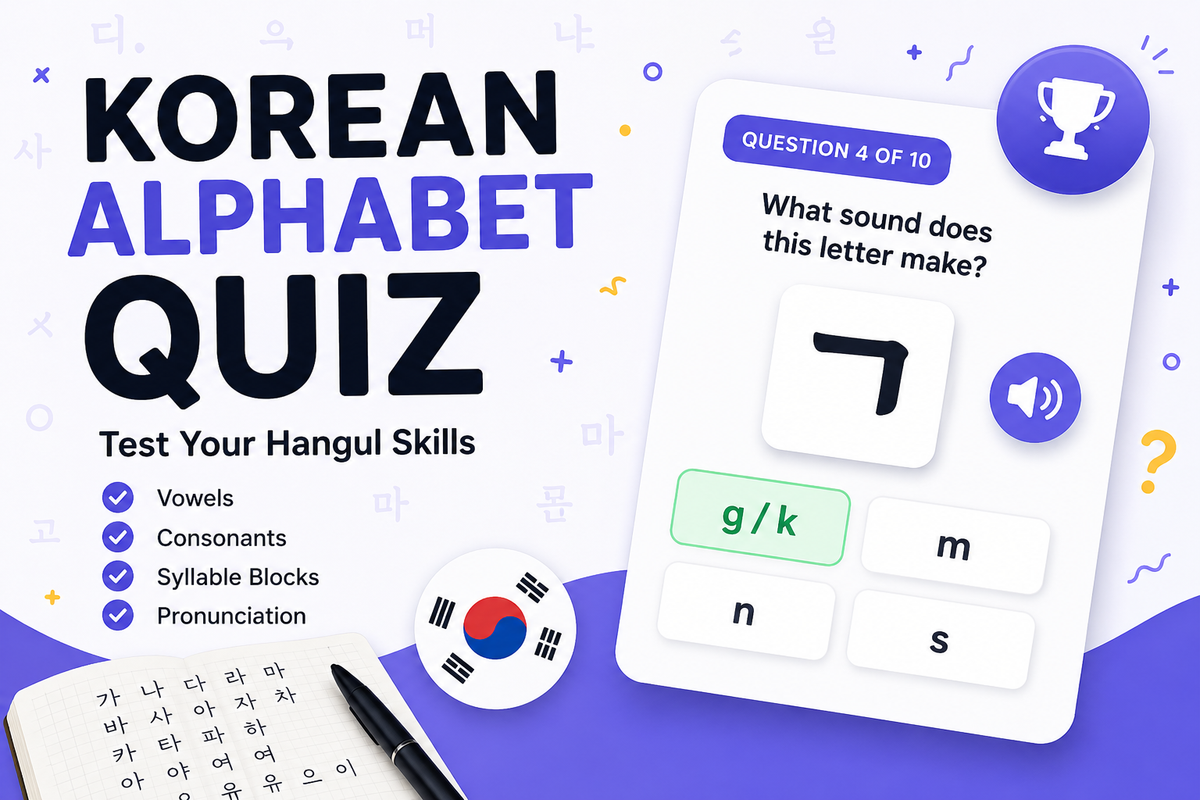
Take this Korean alphabet quiz to test your Hangul vowels, consonants, pronunciation, syllable blocks, and beginner Korean words. Each round gives you 10 random questions from a larger question bank, so you can retake the quiz and keep practicing.
If you need a quick review before starting, open the Hangul alphabet guide first. Then come back here and check how many Korean letters you can recognize without looking at the chart.
Korean alphabet quiz
Look at the Hangul letter, syllable, or audio prompt. Choose the best answer. You will only see the correction after you answer.
Which sound matches this Hangul vowel?
What this Korean alphabet quiz tests
This quiz is more than a simple Hangul chart check. It mixes letter recognition, romanization, pronunciation, syllable blocks, short Korean words, and audio questions. That makes it closer to how you actually use the Korean alphabet when reading subtitles, signs, messages, or beginner sentences.
Some questions ask you to recognize a letter like ㅏ, ㄱ, or ㅇ. Others ask you to read blocks like 가, 고, and 무. You may also hear a Korean word and choose the Hangul spelling that matches it.
If your score is low, do not memorize everything at once. Start with the basic vowels, then learn common consonants, then practice simple syllables. After that, move into beginner Korean sentences and particles.
How to improve after the quiz
After finishing the quiz, review your missed questions first. If you often miss vowels, go back to the vowel chart. If you miss syllable blocks, practice combining consonants and vowels slowly: ㄱ + ㅏ = 가, ㄴ + ㅣ = 니, ㅁ + ㅜ = 무.
Once Hangul feels easier, continue with Korean sentence structure and Korean particles. These guides help you understand what Korean words are doing inside a sentence.
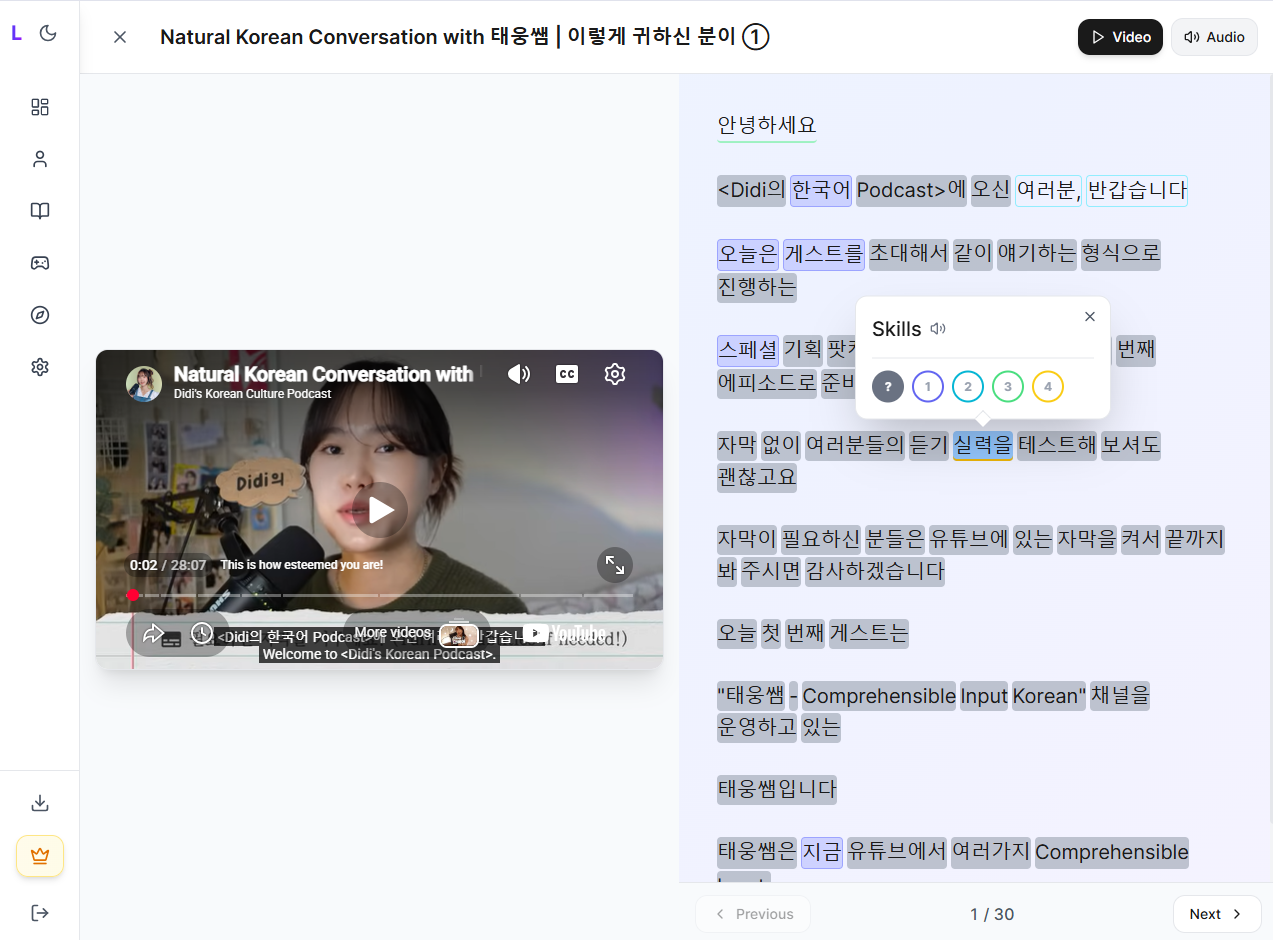
You can also use Lokia to learn Korean from real videos and subtitles. Seeing Hangul in real content helps you move from alphabet memorization to actual reading and listening.